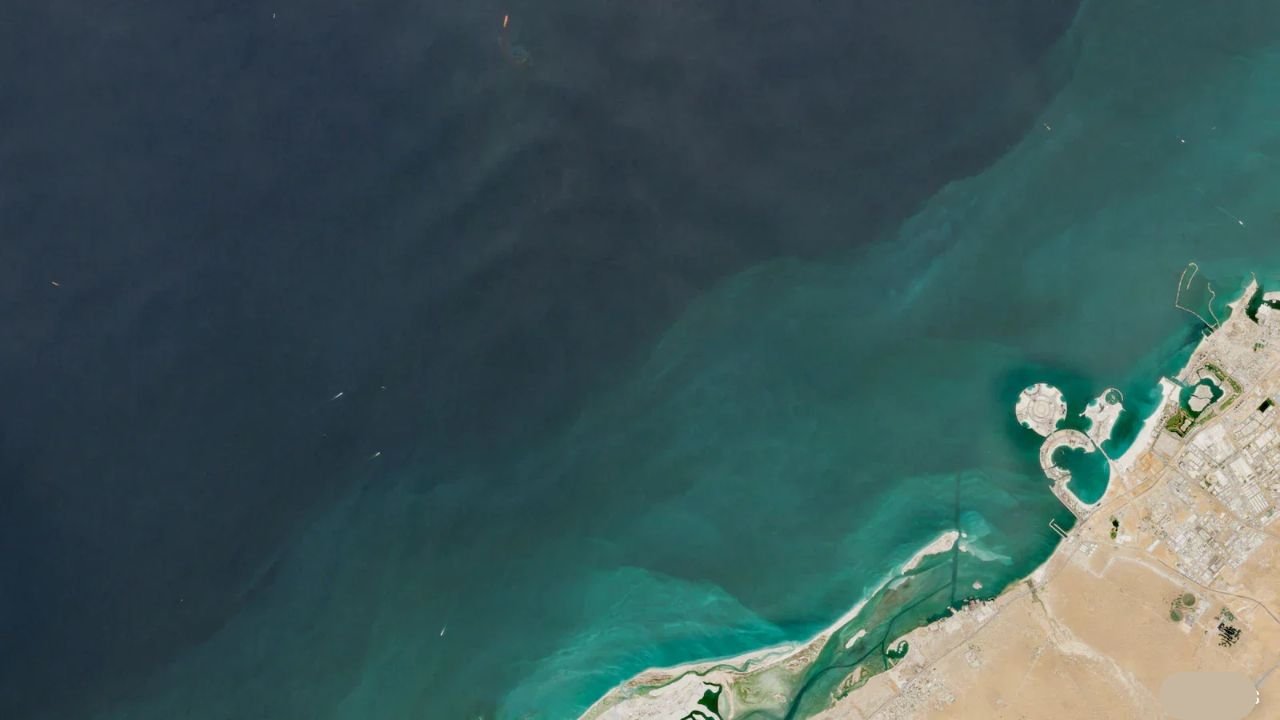
UAE closes more beaches after an oil spill in the Persian Gulf, as authorities work to prevent coastal pollution and protect marine environments.
The United Arab Emirates has expanded beach closures along its northern coastline after an oil spill in the Persian Gulf raised concerns about marine pollution and potential environmental damage. Authorities in Sharjah have closed Al Hamriya Beach as a precaution, while Ras Al Khaimah has announced that all its beaches will remain closed until further notice.
The closures follow the detection of an oil spill off the coast of Umm Al Quwain, north of Dubai. The UAE’s Ministry of Climate Change and Environment initially ordered the temporary closure of beaches and coastal areas in Umm Al Quwain while technical teams assessed the situation.

The incident has drawn attention to the environmental risks facing the Gulf region, where maritime traffic, oil transportation and recent security incidents have increased concerns about pollution at sea.
Authorities are taking precautionary measures to protect coastal areas, while the identity of the tanker involved has not been officially disclosed in the reporting.
UAE Expands Beach Closures Across Northern Emirates
The latest restrictions affect several coastal areas in the northern UAE.
Sharjah authorities closed Al Hamriya Beach to help prevent pollution from reaching the shoreline. Specialised response teams were also deployed to carry out protective measures and support efforts to keep pollutants away from the emirate’s beaches.
Ras Al Khaimah separately announced the closure of all its beaches until further notice. The authorities did not specify the reason for that decision in their announcement, although it followed the closures in neighbouring emirates after the oil spill.
In Umm Al Quwain, authorities had already closed all beaches and coastal areas temporarily while technical teams conducted environmental assessments and determined the safety measures required.
These decisions underline the precautionary approach being taken as authorities work to assess the spill and limit its potential impact.
Where Did the Oil Spill Occur?
The oil spill was detected off the coast of Umm Al Quwain, an emirate located north of Dubai.
The UAE’s Ministry of Climate Change and Environment confirmed the incident and ordered temporary restrictions on access to affected coastal areas. However, the ministry did not identify the tanker involved in the spill in the reported announcement.
The lack of publicly confirmed information about the vessel means important details surrounding the incident remain unclear.
Authorities are focusing on assessing the environmental situation and taking steps to prevent further pollution from affecting beaches and coastal waters.
The incident also highlights the challenges associated with responding to oil spills in busy maritime regions, where currents and changing sea conditions can complicate efforts to contain pollution.
Are Residents at Risk From the Unusual Odours?
Residents in Umm Al Quwain, Sharjah and Ajman reported unusual odours as the spill became a concern.
The UAE’s Ministry of Climate Change and Environment said the reported odours did not pose a health risk to residents.
Nevertheless, the beach closures and environmental assessments indicate that authorities are taking precautions to protect coastal areas and manage the incident.
The ministry’s statement about the odours should not be interpreted as confirmation that every potentially affected beach or marine area is safe for public access. Beach closures remain in place according to the reported restrictions, and visitors should follow official instructions.
Fishermen and other sea users have also been urged to avoid affected areas and comply with the directions issued by the relevant authorities.
Environmental Teams Work to Protect Coastal Areas
The response includes specialised teams and relevant authorities working to prevent pollutants from reaching beaches.
In Sharjah, officials said response teams had been deployed to implement protective measures and help safeguard coastal areas.
In Umm Al Quwain, technical assessments are intended to help authorities determine the appropriate safety and marine-protection measures.
Such operations are important because oil pollution can affect coastal environments and marine life. The eventual impact of a spill depends on factors including the amount of oil released, the location of the incident, sea conditions and the effectiveness of containment and cleanup efforts.
The full environmental consequences of the current incident were not established in the reported coverage. Assessments and response activities remain important to understanding the extent of the pollution and determining the measures required.
Gulf Region Faces Wider Maritime Pollution Concerns
The latest UAE spill comes amid a series of maritime pollution incidents in the Gulf region in recent months.
In August, a tanker ran aground near Oman’s southeastern coast, leaving authorities to deal with an oil slick reported to cover an area approximately six-and-a-half times the size of Manhattan.
Iran also faced an oil spill near Qeshm Island, close to a breeding habitat for endangered hawksbill sea turtles.
These incidents demonstrate how oil pollution can become a regional environmental concern, particularly when spills occur near sensitive coastal habitats.
The current situation has added to existing worries about maritime safety and environmental protection across the Gulf and surrounding waters.
Regional Conflict Raises Risks for Commercial Shipping
Security tensions have added another dimension to the environmental risks facing the region.
A cargo vessel sank in the Strait of Hormuz earlier in October after an attack triggered a fire, according to Singapore’s Maritime and Port Authority.
Other commercial vessels have also been struck by projectiles. Such incidents can create the risk of fuel leaks and marine pollution, even when a ship’s main oil storage tanks remain intact.
The Strait of Hormuz is a strategically important route for global energy shipments. Disruptions and attacks involving commercial vessels therefore raise concerns that extend beyond maritime security to include potential environmental damage.
The current oil spill has highlighted the relationship between shipping safety and the protection of marine environments in a region that plays an important role in international energy transportation.
However, the reported information does not establish that the current UAE spill was caused by a particular attack or identify the vessel responsible. Authorities have not publicly confirmed the tanker’s identity in the cited reporting.
What Happens Next?
The immediate priority is to contain the spill, assess the affected areas and prevent further pollution from reaching the coastline.
Beach closures are precautionary measures intended to limit exposure while authorities evaluate conditions. The restrictions will remain important until officials provide further instructions about access and safety.
Environmental assessments should help establish the extent of the contamination and identify the measures needed to protect coastal areas.
For residents, fishermen and visitors, the key message is to respect the closures and avoid affected coastal waters until authorities confirm that access is permitted.
The situation also highlights the importance of monitoring maritime incidents closely, particularly in areas where commercial shipping, energy transportation and sensitive coastal environments intersect.
Conclusion
The UAE’s decision to close additional beaches reflects growing concern over an oil spill detected off Umm Al Quwain. Sharjah has closed Al Hamriya Beach, Ras Al Khaimah has shut all its beaches until further notice, and restrictions remain in place across Umm Al Quwain’s beaches and coastal areas.
Authorities say unusual odours reported in nearby emirates do not pose a health risk, while response teams continue taking measures to prevent pollution and assess environmental conditions.
The incident comes amid wider concerns about oil spills and maritime security across the Gulf region. With the tanker involved not publicly identified in the reported coverage, important questions about the incident remain unresolved.
For now, environmental monitoring, containment efforts and compliance with official beach closures will be central to limiting the potential impact on the UAE’s coastline.
Disclaimer: This article is for informational purposes only and is based on the cited reporting. Beach access restrictions and environmental assessments may change. Follow official UAE government announcements for the latest safety instructions.
Source: Bloomberg, “UAE Shuts More Beaches as It Deals With Oil Spill in Gulf,” October 25, 2026.